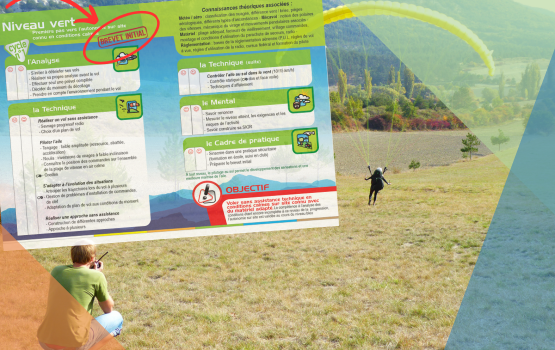
Next, you can choose between an advanced course or a package of 10 supervised flights with your local school to continue improving your skills.
The costs to reach the Initial Certificate may vary slightly depending on the school and region, but here is a general estimate of the fees you might encounter for a complete training path:
- Initiation course (5 days): €750
- Progression course (5 days): €750
- Package of 10 advanced flights: €500
Estimated total for training up to the Initial Certificate: €2,000
It is important to note that these figures are averages. Some students may progress faster, while others may need more supervised time to reach a sufficient level of autonomy. For example, although some people may have the technical skills required to fly alone, they may lack confidence and might need additional guidance before being able to complete their first solo flight.
Pro tip: If you have a very tight budget, there are some interesting alternatives to reduce the cost of your training:
- The “work-for-training” system with schools
Some paragliding schools offer barter opportunities. For 1 or 2 weeks, you can work at the school—driving the shuttle that transports students and passengers, for example. In exchange for this work, you receive your course for free! This is an excellent option for those willing to invest a little time to save money.
- Lower-cost courses offered by the ENSM
The ENSM (École Nationale de Ski et de Montagne), which trains future paragliding instructors, also offers courses at reduced prices. These courses are organized to allow future instructors to train under the supervision of experienced trainers. As a student, you will be guided by two instructors and four student-instructors, practicing alongside 4 to 5 other trainees like yourself. This method is highly effective and allows you to receive quality training at an affordable price.
Buying New or Second-Hand Equipment?
The choice between buying new or second-hand equipment mainly depends on your budget. Beginner gear is particularly sought after on the second-hand market. If you choose to buy new, know that you will have no trouble reselling your equipment once you have progressed and want to switch to a more performance-oriented wing.
Pro tip: It is important to note that the listed price on equipment (wings, harnesses, and reserves) is rarely the price you will actually pay. With major brands, you can almost always get a 15–20% discount when buying new. Don’t be misled by a seller trying to charge you the full retail price.
If you choose second-hand equipment, there are several items to check before completing the purchase.
I recommend reading our article “How to Choose Your Paragliding Equipment for Beginners” for more details.
For Paragliding Wings:
Require a maintenance report dated within the last 6 months. Even if the wing hasn’t been used recently, line lengths can vary, which changes the wing’s trim.
Carefully inspect the wing: check for holes, the color of the lines (touch them to detect any deformities), and the texture of the fabric. Personally, I even touch the fabric or lines with my tongue to detect exposure to salt water, especially after a sea landing.
Avoid buying a wing that is too old. A wing that is 3–4 years old with a good maintenance report is a good compromise: it still has a long lifespan ahead and retains resale value on the second-hand market.
For Reserve Parachutes:
Most manufacturers set a lifespan of 10 years from the date of purchase, regardless of the model (round, square, triangular, steerable, etc.). For example, when I buy a 3-year-old reserve, I never pay more than 70% of the new price, because it still has 7 years of potential service life remaining.
For Harnesses:
Harnesses are generally very durable and usually only need replacing after hundreds of hours of use or poor storage. You can confidently buy a second-hand harness as long as you check its size and condition. It is highly recommended to try the harness before buying or consult the manufacturer’s sizing information to ensure it fits your body type.
Budget Overview
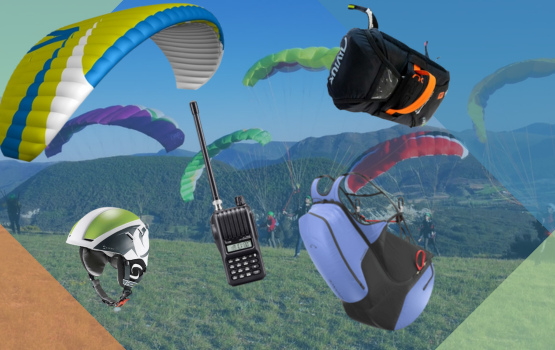
Here is an overview of equipment costs depending on whether you buy new or second-hand:
New Equipment:
- Paraglider: €2,750
- Reversible harness: €800
- Square reserve: €700
- Helmet: €120
- Radio: €120
Total: €4,490
Second-Hand Equipment:
- Paraglider: €1,800
- Reversible harness: €550
- Square reserve: €350
- Helmet: €0 (although not recommended, you can use a ski or climbing helmet)
- Radio: €70
Total: €2,770
Of course, especially for second-hand purchases, prices can vary. If you are patient and persistent in your search, it is possible to equip yourself for a budget between €2,000 and €2,300.
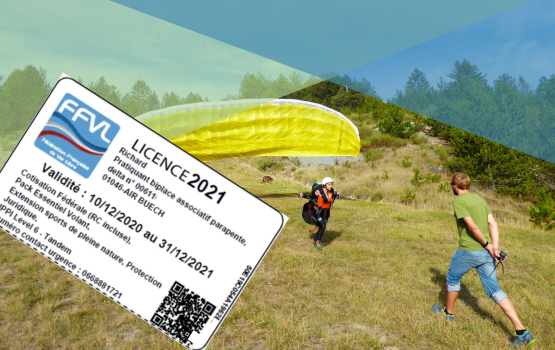
License Costs:
- First year: You can obtain a beginner’s license (primo-licencié) for €55, plus a €20 club membership fee.
- Following years: The annual license costs €95, with the €20 club membership fee still applicable.
As you progress and obtain your Confirmed Pilot Certificate, you may receive a discount on your license fee, which can reduce costs in subsequent years.
Pro tip: Aerial liability insurance (RC Aérienne) only covers damages you may cause to others. To protect yourself personally, you will need additional coverage. When obtaining your license, you can choose supplementary bodily injury coverage, but in my experience, the compensation levels are not very high. I therefore recommend checking with other insurers to find coverage that meets your needs.
Personally, I opted for the PRAXIS contract from MAIF, which is an excellent alternative and also covers loss of income for self-employed or freelance pilots. It’s up to you to do your research!
Final Words
By now, this article should give you a fairly clear idea of what to expect. However, it is important to know that once you have invested in your equipment and training, additional costs will always be associated with paragliding.
Depending on your flying frequency, you will need to have your paraglider serviced every one to two years. You will also need to repack your reserve parachute, either yourself or by a professional. Additionally, you will need to renew your FFVL license each year and continue progressing through further training courses (cross-country course, mental training, Flight Incident Simulation (SIV) course, etc.).
Paragliding is an exciting sport, but like any aerial activity, it requires a long-term commitment in terms of both time and budget. Be prepared to invest in your safety, your progression, and your enjoyment of flying!